EndoFit topics

Your stomach suddenly becomes swollen, painful, and tight — sometimes within just a few hours.
Clothes that fit in the morning may feel uncomfortable by the afternoon. Some people even describe looking several months pregnant during a flare.
This experience is commonly called endo belly.
For many people living with endometriosis, these sudden changes can feel confusing, frustrating, and even alarming.
You might find yourself wondering:
• Why does endometriosis cause bloating?
• Why does my stomach swell so suddenly?
• Is this a digestive problem — or something else?
Endo belly is a term many people with endometriosis use to describe sudden abdominal swelling, bloating, and pressure during symptom flares.
Unlike typical bloating after a large meal, endo belly can:
• appear quickly
• cause visible abdominal swelling
• feel painful or tight
• fluctuate throughout the day
Some people also experience:
• digestive discomfort
• nausea
• constipation or diarrhea
• increased pelvic pain
Many people report their abdomen becoming hard, tight, or visibly distended, especially during symptom flares or around menstruation.
For years, doctors struggled to explain why this swelling could appear so suddenly.
Research now suggests endo belly is not caused by a single digestive issue.
Instead, several biological systems may interact at the same time, including:
• pelvic inflammation
• immune system activation
• digestive changes
• nervous system signalling
• fluid shifts in inflamed tissues
When these systems flare together, the abdomen can suddenly swell and feel tight.
Understanding this biology helps explain why endo belly can appear quickly — and why it often fluctuates throughout the month.
Endo belly isn’t simply “bad digestion.”
Endometriosis affects multiple systems in the body — including inflammation, the immune system, digestion, and nerve signalling.
When these systems react at the same time, the abdomen can become swollen, sensitive, and painful.
Here are some of the key biological reasons researchers believe endo belly happens.
Endometriosis lesions release inflammatory chemicals such as prostaglandins and cytokines.
These signals attract immune cells and increase blood flow to the pelvis.
That inflammation can spread into nearby tissues — including the intestines.
The result?
Swelling, pressure, and a stomach that suddenly feels tight.
Endometriosis keeps the immune system constantly switched on.
Immune cells try to respond to endometriosis lesions, but the response often becomes chronic.
This ongoing immune activity produces more inflammatory signals.
And inflammation inside the pelvis can easily affect nearby organs — especially the gut.
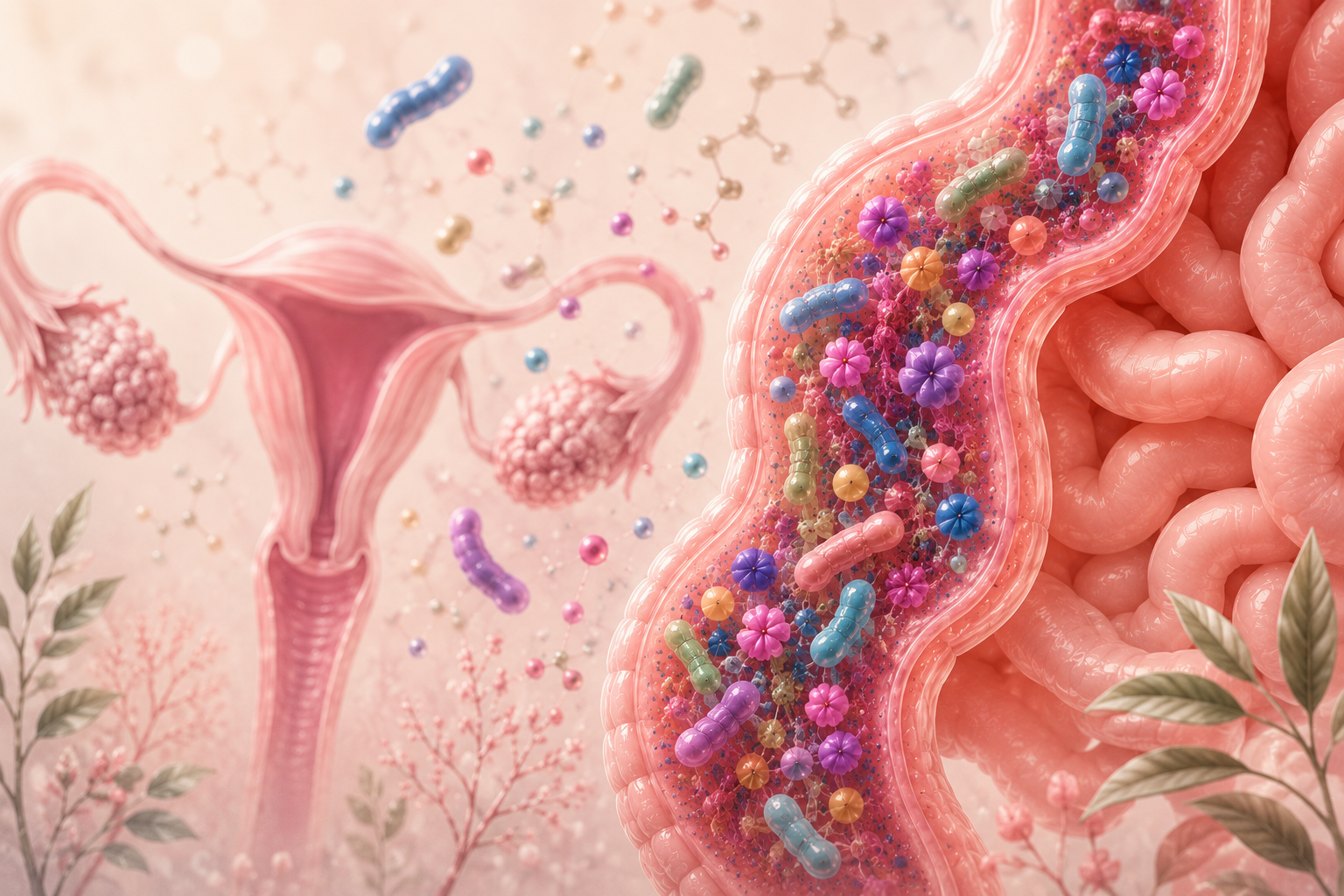
The intestines sit right next to the reproductive organs.
So when inflammation occurs in the pelvis, it can influence the nerves and muscles that control digestion.
Researchers sometimes call this the gut–pelvis connection.
When digestion slows down or becomes irregular:
• gas can build up
• food may move more slowly
• bloating becomes more likely
This is one reason many people with endometriosis also experience IBS-like symptoms.
Endometriosis can also affect how pain signals travel through the nervous system.
Over time, nerves in the pelvis may become more sensitive.
Doctors call this visceral hypersensitivity.
That means normal digestive sensations — like gas or pressure — may feel much stronger than usual.
Even small amounts of bloating can feel extreme.
Inflammation doesn’t just cause pain.
It also changes how fluid moves through tissues.
When inflammatory signals increase, fluid can move into the surrounding tissues more easily.
This can temporarily increase abdominal swelling — especially during symptom flares.
Many people say their stomach feels hard during endo belly.
Not just bloated.
This may be due to something called muscle guarding.
When the pelvis is inflamed, the nervous system sometimes tightens nearby muscles to protect the area.
That tension can make the abdomen feel firm and visibly swollen.
Many people with endometriosis also experience digestive symptoms such as:
• bloating
• abdominal pain
• constipation
• diarrhea
Because of this overlap, endometriosis is sometimes confused with irritable bowel syndrome (IBS).
The symptoms can feel very similar.
But the underlying causes are often different.
Irritable bowel syndrome is a functional digestive disorder.
It affects how the intestines move and respond to food.
Common IBS triggers include:
• certain foods
• stress
• changes in the gut microbiome
• digestive sensitivity
IBS symptoms often improve when digestive triggers are identified and managed.
Endo belly is usually connected to inflammation and immune activity within the pelvis.
Endometriosis lesions release inflammatory molecules that can affect nearby organs — including the intestines.
This may lead to:
• digestive disruption
• abdominal swelling
• pelvic pressure
• pain during symptom flares
Because the reproductive organs and intestines sit close together inside the pelvis, inflammation in one area can influence the other.
Some people with endometriosis may also develop IBS.
Which means both conditions can exist at the same time.
This is one reason digestive symptoms are so common in endometriosis.
Endo belly usually isn’t caused by just one thing.
It happens when several body systems are under stress at the same time.
We think about endometriosis through what we call the EndoFit Recovery Matrix.
This framework focuses on the key biological systems that influence symptoms:
• inflammation and the immune system
• gut and digestion
• hormone signalling
• nervous system regulation
• detoxification pathways
• metabolic stability
When these systems become overwhelmed, symptoms like bloating, fatigue, and pelvic pain can flare.
But when these systems are supported properly, many people notice their symptoms become much more manageable.
Endo belly can last a few hours, several days, or sometimes longer, depending on what’s triggering the flare.
For some people, the swelling appears quickly and settles once pelvic inflammation calms down. For others, bloating may fluctuate throughout the menstrual cycle.
Several things can influence how long endo belly lasts, including:
• inflammation levels
• digestion and gut sensitivity
• hormonal changes
• stress and nervous system activation
• diet and lifestyle triggers
Because these systems interact, reducing endo belly often means supporting the whole system, not just digestion.
Over time, improving gut health, calming inflammation, and reducing triggers can help reduce both the frequency and intensity of endo belly flares.
This is where the EndoFit Method comes in.
Instead of focusing on just one trigger, EndoFit works on improving the systems that drive inflammation and digestive sensitivity.
Inside the Endo45 app we help guide you through simple habits that support those systems.
For example:
• reducing inflammatory foods like highly processed foods and excess sugar
• limiting triggers like alcohol and caffeine
• supporting gut health through diet and lifestyle
• improving sleep and nervous system recovery
• identifying personal triggers through symptom tracking
These changes help calm the biological systems that contribute to endo belly.
As these systems improve, many users see their EndoFit score increase — reflecting improvements in symptoms, energy, and overall wellbeing.
Endo belly is a common symptom of endometriosis and can feel random and frustrating.
Understanding the biology behind endo belly helps explain why this symptom appears suddenly — and why it can vary from day to day.
The goal is not just tracking symptoms, but learning how to support the biological systems that influence them.
That’s exactly what the Endo45 app and EndoFit Method are designed to help with.
"The goal isn’t just to track symptoms — it’s to understand what’s driving them and support the systems that help your body recover." Juliet Oliver - Founder
Endo belly is a term used to describe sudden abdominal swelling and bloating experienced by many people with endometriosis.
It may be caused by pelvic inflammation, immune system activation, digestive changes, nervous system sensitivity, and fluid shifts in inflamed tissues.
Unlike typical bloating after eating, endo belly can appear rapidly during symptom flares and may cause visible abdominal swelling.
Yes. Many people with endometriosis report sudden abdominal swelling and bloating during symptom flares.
Endometriosis-related inflammation in the pelvic cavity can influence nearby nerves, digestive function, and fluid balance, which may contribute to abdominal swelling.
Inflammatory molecules such as prostaglandins increase during menstruation, which may increase inflammation, pain, and digestive sensitivity.
Juliet Oliver is an engineer, endometriosis researcher, and founder of Endo45. After years of struggling with stage 4 endometriosis and medical dead ends, she created the Endo45 app to help women track symptoms, uncover patterns, and take back control of their health using science-backed strategies.
Anaf, V., Simon, P., El Nakadi, I., Fayt, I., Buxant, F., Simonart, T., & Noël, J. C. (2002). Relationship between endometriotic foci and nerves in rectovaginal endometriotic nodules. Human Reproduction, 17(7), 1895–1901.
Anaf, V., Chapron, C., El Nakadi, I., De Moor, V., Simonart, T., Noël, J. C., & Fayt, I. (2006). Pain, mast cells, and nerves in peritoneal, ovarian and deep infiltrating endometriosis. Fertility and Sterility, 86(5), 1336–1343.
Ballard, K. D., Seaman, H. E., De Vries, C. S., & Wright, J. T. (2008). Can symptomatology help in the diagnosis of endometriosis? Findings from a national case-control study. BJOG, 115(11), 1382–1391.
Berkley, K. J., Rapkin, A. J., & Papka, R. E. (2005). The pains of endometriosis. Science, 308(5728), 1587–1589.
Bulun, S. E. (2019). Endometriosis. New England Journal of Medicine, 380(13), 1244–1256.
Burney, R. O., & Giudice, L. C. (2012). Pathogenesis and pathophysiology of endometriosis. Fertility and Sterility, 98(3), 511–519.
De Winter, B. Y., Van Den Wijngaard, R. M., & De Jonge, W. J. (2012). Intestinal mast cells in gut inflammation and motility disturbances. Biochimica et Biophysica Acta, 1822(1), 66–73.
Ek, M., Roth, B., Ekström, P., Valentin, L., & Bengtsson, M. (2015). Gastrointestinal symptoms among women with endometriosis. BMC Gastroenterology, 15, 59.
Harel, Z. (2006). Dysmenorrhea in adolescents and young adults: From pathophysiology to pharmacological treatments. Journal of Pediatric and Adolescent Gynecology, 19(6), 363–371.
Hotamisligil, G. S. (2017). Inflammation, metaflammation and immunometabolic disorders. Nature, 542(7640), 177–185.
Issa, B., Onon, T. S., Agrawal, A., Shekhar, C., Morris, J., Hamdy, S., & Whorwell, P. J. (2012). Visceral hypersensitivity in endometriosis: A new target for treatment? Gut, 61(3), 367–372.
Kempuraj, D., Papadopoulou, N., Stanford, E. J., Christodoulou, S., Madhappan, B., Sant, G. R., Solage, K., Adams, T., & Theoharides, T. C. (2004). Increased numbers of activated mast cells in endometriosis lesions positive for corticotropin-releasing hormone and urocortin. American Journal of Reproductive Immunology, 52(4), 267–275.
Malykhina, A. P. (2007). Neural mechanisms of pelvic organ cross-sensitization. Neuroscience, 149(3), 660–672.
Maroun, P., Cooper, M. J., Reid, G. D., & Keirse, M. J. (2009). Relevance of gastrointestinal symptoms in endometriosis. Australian and New Zealand Journal of Obstetrics and Gynaecology, 49(4), 411–414.
Velho, R. V., et al. (2023). Endo belly: What is it and why does it happen? Narrative review. American Journal of Reproductive Immunology.
Zhang, T., De Carolis, C., Man, G. C. W., & Wang, C. C. (2018). The link between immunity, autoimmunity and endometriosis: A literature update. Autoimmunity Reviews, 17(10), 945–955.
Share this article


Subscribe to our newsletter for all the exclusive updates, articles and resources direct to your inbox.


.svg)

.png)