EndoFit topics
Endometriosis is usually thought of as a disease of the pelvis.
The lesions are in the pelvis.
The pain is in the pelvis.
The surgeries happen in the pelvis.
But new research suggests part of the story may start somewhere completely different.
The gut.
A 2025 study found that transferring gut microbes from healthy donors into mice with endometriosis reduced lesion volume by nearly 75%.
At the same time, researchers observed improvements in gut barrier function, immune signalling, and levels of acetate — a beneficial compound produced by gut bacteria.
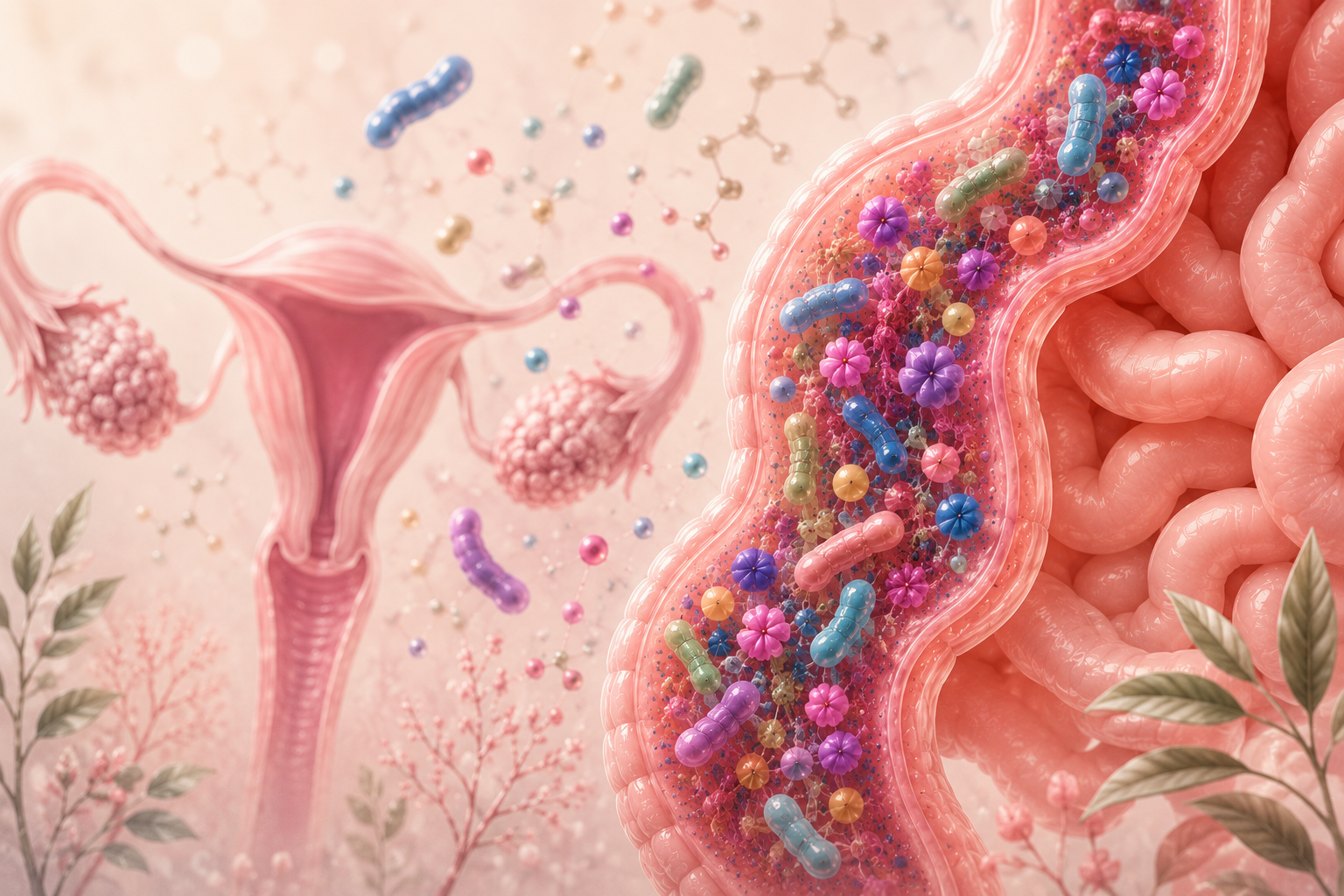
The findings add to a growing body of evidence suggesting that endometriosis may be influenced by a gut–immune–microbiome connection.
And that could change how researchers think about the disease entirely.
The gut microbiome is the collection of trillions of bacteria and other microorganisms that live in the digestive tract.
Research suggests that disruptions to the gut microbiome may influence endometriosis through several pathways, including:
Scientists increasingly believe that changes in gut bacteria may not simply be a consequence of endometriosis.
They may also contribute to lesion growth and disease progression.
This emerging area of research is often called the gut–immune–endometriosis axis.
Researchers induced endometriosis in mice and then altered their gut microbiomes using fecal microbiota transplantation (FMT).
One group received microbiota from healthy donors.
Another received microbiota associated with endometriosis.
The results were striking.
Mice that received microbiota from healthy donors experienced:
Meanwhile, microbiota associated with endometriosis worsened disease-related markers.
The researchers concluded that gut-derived acetate may help suppress lesion growth through effects on immune regulation and intestinal barrier function.
.png)
The immune system plays a central role in endometriosis.
One of its jobs is identifying and removing cells that shouldn't be growing outside the uterus.
But in endometriosis, this process appears to become disrupted.
Researchers believe gut dysbiosis — an imbalance in the gut microbiome — may contribute to this altered immune environment.
When beneficial microbes decline, inflammatory signalling can increase.
Over time, that may create conditions that support lesion survival and growth.
One of the most important findings from the study involved acetate.
Acetate is a short-chain fatty acid produced when beneficial gut bacteria ferment dietary fibre.
Think of it as one of the chemical messages sent by a healthy microbiome.
Researchers found that mice receiving healthy microbiota produced more acetate.
As acetate increased:
The findings suggest acetate may be one of the molecules linking gut health to endometriosis progression.
The gut lining acts like a security fence.
Its job is to keep harmful compounds inside the digestive tract while allowing nutrients to pass through.
When this barrier becomes impaired, inflammatory molecules may enter circulation more easily.
Researchers found improvements in markers such as:
These proteins help maintain gut barrier integrity.
A stronger gut barrier may help reduce inflammatory signalling throughout the body.
Macrophages are immune cells that help coordinate inflammation and tissue repair.
Inside endometriosis lesions, macrophages can either help suppress lesion growth or support it.
The researchers found that acetate appeared to influence macrophage behaviour through a signalling pathway called JAK1/STAT3.
You don't need to remember the pathway name.
The important takeaway is this:
Changes in the gut microbiome appeared to influence immune cell behaviour inside endometriosis lesions.
That's a remarkable finding.
.png)
What makes this study particularly compelling is that it doesn't stand alone.
Over the past several years, multiple research groups have observed similar findings.
Different methods.
Different interventions.
Similar conclusions.
A 2023 study found that microbiota-depleted mice developed smaller endometriosis lesions.
When researchers reintroduced microbiota associated with endometriosis, lesion growth returned.
This suggested that disease-promoting effects may travel with the microbiome itself.
In 2021, researchers investigated another short-chain fatty acid called butyrate.
Like acetate, butyrate is produced by beneficial fibre-fermenting bacteria.
The study found reduced lesion growth and altered inflammatory pathways associated with endometriosis.
Different metabolite.
Same general direction.
Smaller lesions.
A 2019 study found that altering gut bacteria with metronidazole reduced lesion progression in mice.
When microbiota associated with endometriosis were later reintroduced, lesion growth increased again.
Once again, researchers observed a connection between the microbiome and lesion behaviour.
A newer study published in 2026 found that fluvastatin reduced lesion volume and lesion mass in mice.
Interestingly, when researchers depleted the microbiome, some of those benefits weakened.
FMT from fluvastatin-treated mice partially transferred the protective effect.
This suggests the microbiome may help mediate the effects of therapies that aren't traditionally considered "gut treatments."
It's important not to overstate the findings.
This research does NOT show that:
❌ Fecal microbiota transplantation is a proven treatment for endometriosis
❌ Improving gut health will eliminate lesions
❌ Endometriosis is caused solely by gut dysfunction
❌ Everyone with endometriosis has the same microbiome
The research does suggest that:
✅ The microbiome may influence lesion growth
✅ Gut-derived metabolites may affect immune function
✅ The gut could become an important future treatment target
✅ Endometriosis is likely influenced by multiple interconnected biological systems
If the gut influences inflammation and immune signalling, it may help explain why so many people with endometriosis experience symptoms beyond pelvic pain.
Potentially including:
And that perspective may help explain experiences many endo warriors already know to be true.
This is where the EndoFit Method comes in.
The goal isn't to "fix" endometriosis through the gut.
And it's certainly not about chasing miracle probiotics or expensive microbiome protocols.
Instead, EndoFit focuses on supporting the biological systems that research suggests may influence inflammation, immune function, and symptom severity.
Inside the Endo45 app, we help guide you through simple habits that support those systems.
For example:
These changes won't eliminate endometriosis overnight.
But they may help support the biological systems increasingly linked to symptom severity and quality of life.
As those systems improve, many users see their EndoFit™ Score increase — reflecting improvements in pain, bloating, energy, digestion, and overall wellbeing.
Because the goal isn't simply symptom management.
It's understanding what may be driving those symptoms in the first place.
.png)
For years, researchers viewed changes in the gut microbiome as something that happened because of endometriosis.
New research is asking a different question.
What if the microbiome helps influence the disease itself?
A 2025 study found that transferring microbiota from healthy donors reduced endometriosis lesion size by nearly 75% in mice.
Multiple previous studies have reported similar findings using different microbiome-focused interventions.
While this doesn't mean gut therapies are proven treatments for endometriosis, it does strengthen a growing theory:
Endometriosis may be influenced by a gut–immune–microbiome connection.
The goal isn't just tracking symptoms.
It's understanding the biological systems that influence them.
That's exactly what the Endo45 app is designed to help with.
"The goal isn't just to track symptoms — it's to understand what's driving them and support the systems that help your body thrive." — Juliet Oliver, Founder
Emerging research suggests they may. Multiple animal studies have found that altering the gut microbiome can influence lesion growth, inflammation, immune signalling, and levels of beneficial microbial metabolites such as acetate and butyrate.
Gut dysbiosis refers to an imbalance in the composition or function of the gut microbiome. Researchers believe dysbiosis may contribute to inflammation, altered immune responses, and reduced production of beneficial short-chain fatty acids.
SCFAs are compounds produced when beneficial gut bacteria ferment dietary fibre. Important SCFAs include acetate, butyrate, and propionate. They help support gut barrier function, immune regulation, and metabolic health.
Not currently. While animal studies have shown promising results, human clinical trials are needed before FMT can be considered a treatment for endometriosis.
Research generally supports diets rich in plant diversity, fibre, legumes, resistant starches, and fermented foods as ways to support a healthy and diverse microbiome.
No. Endometriosis is a complex systemic inflammatory disease. However, growing evidence suggests the gut microbiome may be one of several biological systems that influence symptom severity and disease progression.
Share this article


Subscribe to our newsletter for all the exclusive updates, articles and resources direct to your inbox.


.svg)

.png)